Emporiqa was losing buyers before they hit "Start Free Trial"
A 72-hour behavioral audit surfaced 3 critical conversion leaks — from a broken live demo to a pricing page that created more questions than answers.
Behavioral Audit

THE SITUATION
Emporiqa offers an AI-powered chatbot for Shopify and e-commerce stores — a genuinely useful product in a crowded space. But their site was doing the product a disservice. Traffic was landing. People were exploring. But they weren't converting into trial signups at the rate the product deserved. The question wasn't "is the product good?" It was: "What's making people talk themselves out of it?" That's where the audit came in.
WHAT I DID
Over 72 hours, I ran a full behavioral walkthrough of the site — mapping the visitor journey from first landing to the trial CTA, and identifying every point where the site creates doubt, friction, or cognitive overload. This included:
→ Live demo experience testing (multiple user scenarios)
→ Pricing page behavioral analysis
→ Trust signal and social proof audit
→ CTA hierarchy and copy review
→ Friction mapping across key conversion pages
The deliverable was a structured audit report with specific fixes ranked by behavioral impact.
Deliverable: 72hrs Behavioral audit
THE 3 CONVERSION LEAKS I FOUND
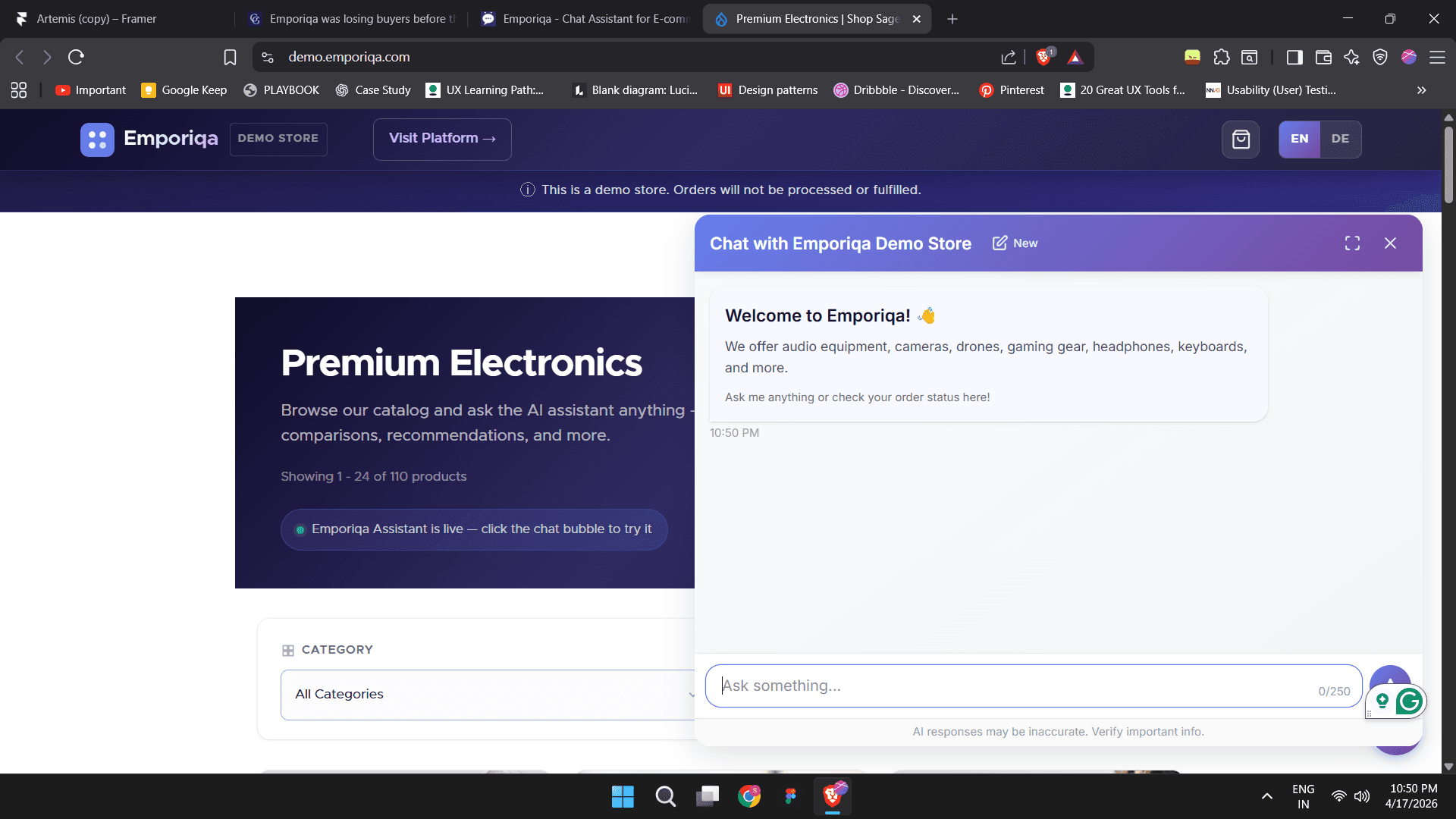
LEAK #1 — High Interaction Friction in the Live Demo
Severity: Critical
The live demo is supposed to be Emporiqa's single strongest conversion tool. It's the moment a visitor goes from "maybe" to "I need this." But during testing, the chat widget regularly failed to process initial queries — requiring multiple attempts or full page refreshes before producing a response.
There were no typing indicators. No immediate feedback. Just silence after submitting — what I call the "black hole" effect.
Behavioral impact: This creates a Negative First Impression bias. If the demo — the best-case scenario — feels unreliable, visitors anchor on that experience and project it onto the actual product. The result: high abandonment from the one page that should be closing the deal.
The fix roadmap included:
→ Add a visible "thinking" indicator (even a simple spinner sets the right expectation)
→ Implement fallback messaging for failed queries
→ A/B test a pre-loaded "sample conversation" as the default demo state
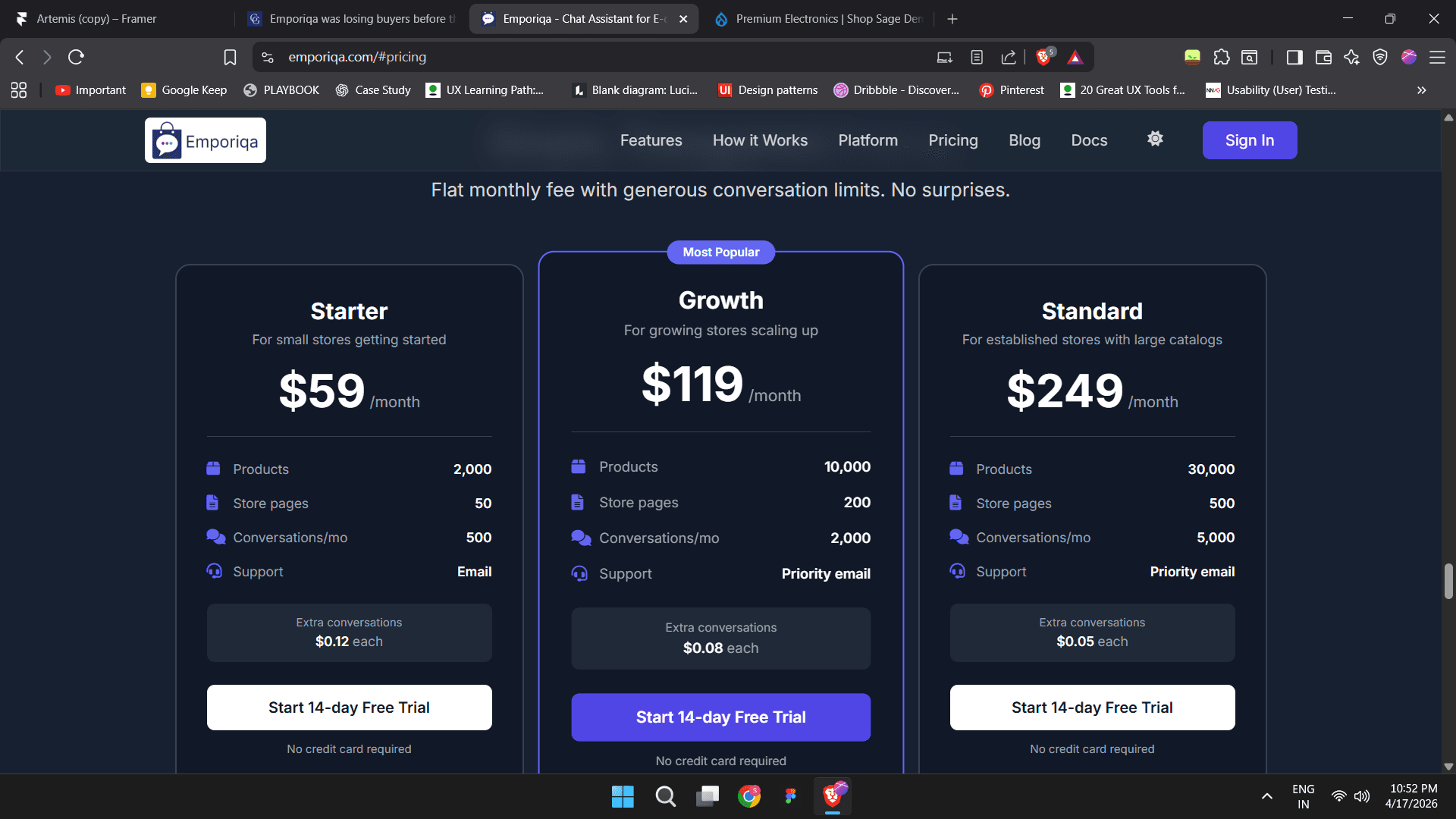
LEAK #2 — Hidden Cost Creates Paralysis at Pricing
Severity: High
The pricing page lists Starter, Growth, and Standard plans — but buries a critical caveat: "You bring your own API key."
For most e-commerce store owners, this introduces two immediate mental blockers: a technical hurdle (what's an API key?) and an unknown variable cost (what will my OpenAI bill actually be?).
Neither is answered anywhere on the page.
Behavioral impact: This triggers Choice Paralysis and Loss Aversion. Visitors can see Emporiqa's $59/mo cost but cannot calculate their total cost of ownership — so they stall. The unknown feels larger than it probably is, and stalling usually means leaving.
The fix roadmap included:
→ Add a simple API cost estimator ("For a store with ~500 chats/month, expect $X–$Y in API costs")
→ Add a plain-language explainer: "What does 'bring your own key' mean for you?"
→ Consider a starter tier that bundles API costs for the first 30 days to remove the barrier to trial
LEAK #3 — Weak Social Proof Signals "Ghost Town"
Severity: High
In the AI chatbot market, buyers are risk-averse. They want to see that other stores — stores like theirs — are already using the product successfully before they commit.
Emporiqa's site is feature-heavy but proof-light. There are no named customer testimonials. No case studies with before/after store metrics. No trust badges (e.g., "Shopify Partner Verified"). The blog exists but is sparse — which can signal low momentum to a careful reader.
Behavioral impact:
This fails the Social Proof heuristic. Without visible evidence that real businesses are winning with Emporiqa, visitors carry a "pioneering risk" — the fear of being an early adopter who gets burned. In a crowded category, that risk tips them toward established competitors.
The fix roadmap included:
→ Add 2–3 merchant testimonials with store name, category, and a specific result ("reduced support tickets by 40%")
→ Add platform trust badges above the CTA
→ Use a "stores using Emporiqa" ticker or counter if customer count data is available
THE PROJECTED IMPACT
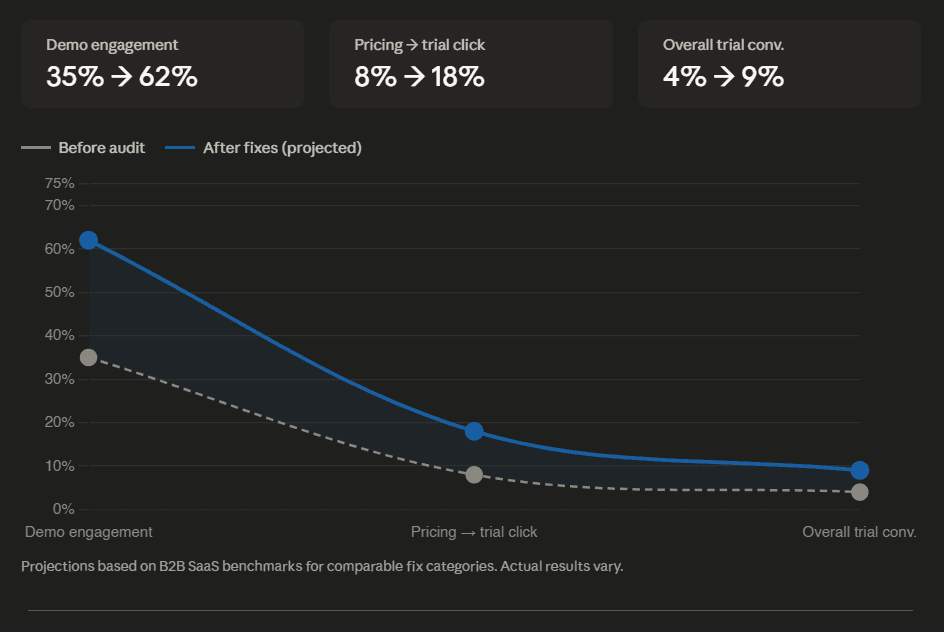
Based on industry benchmarks for B2B SaaS sites at this stage, implementing the fix roadmap would target: