Playmix.ai — Why 199 Out of 200 Signups Never Saw the Product
Mapped the signup-to-trial journey and redesigned friction points blocking users from reaching the product’s core “wow” moment.
Trial Activation

The Situation
Playmix is an AI game-making tool with genuinely strong product-market fit. Once someone pays, 50% are still active three months later — a retention rate most early-stage products would kill for.
But almost nobody was getting there.
Out of every 200 people who signed up, only 1 started a trial. A 0.5% signup-to-trial conversion rate. The product wasn't the problem. The door into the product was.
What I Did
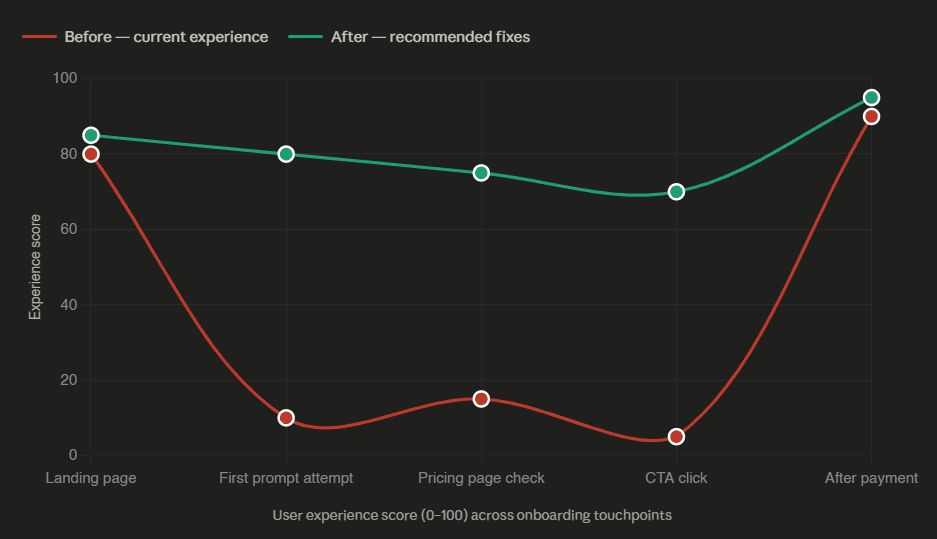
I walked through the entire new user journey — from landing page to trial attempt to pricing page — and mapped every point where trust broke, momentum stalled, or intent died.
I wasn't looking for aesthetic issues. I was looking for behavioral friction: the moments where a motivated user talks themselves out of continuing.
The 3 Conversion Leaks I Found
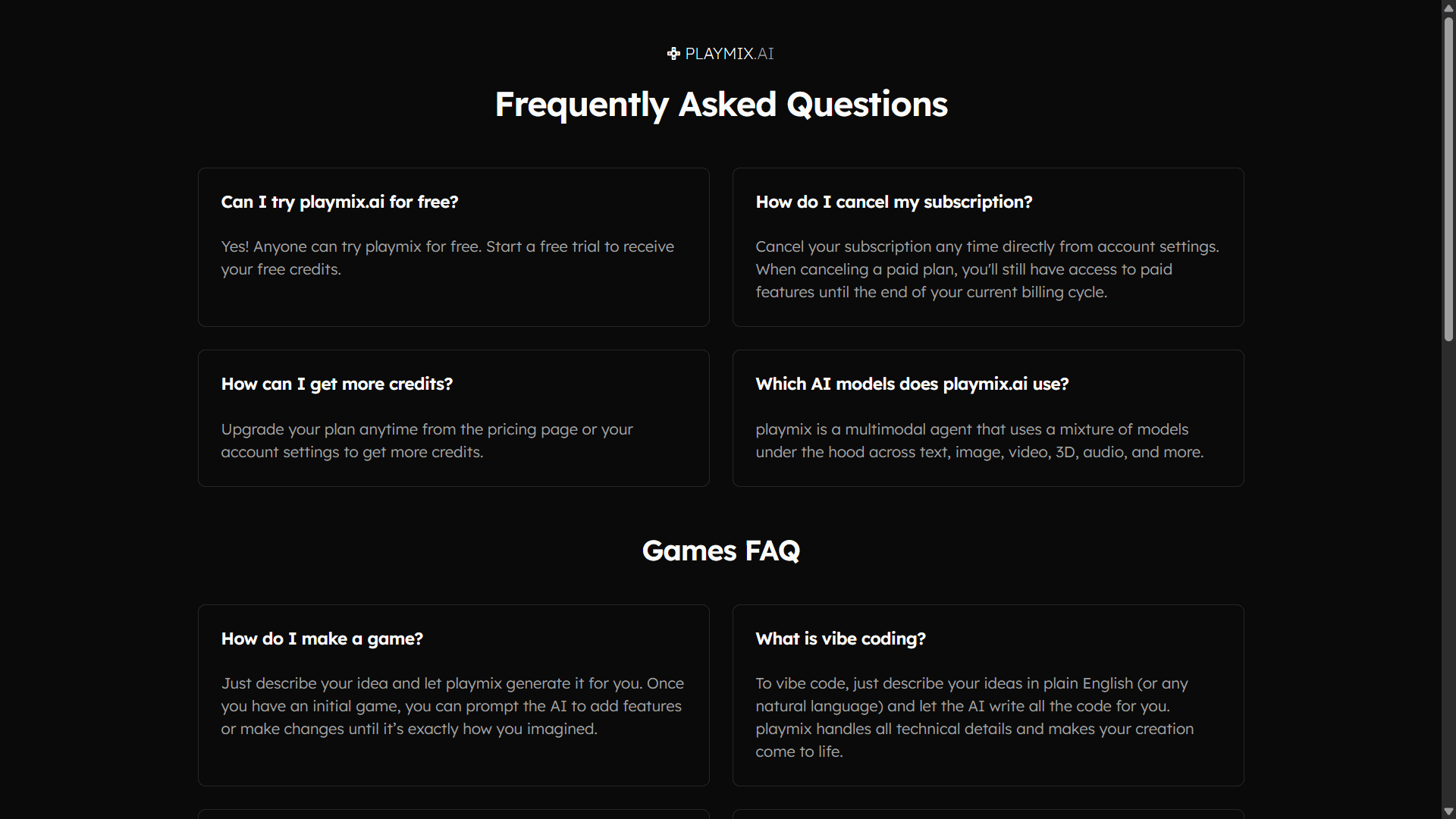
Leak #1 — The Free Credits Lie
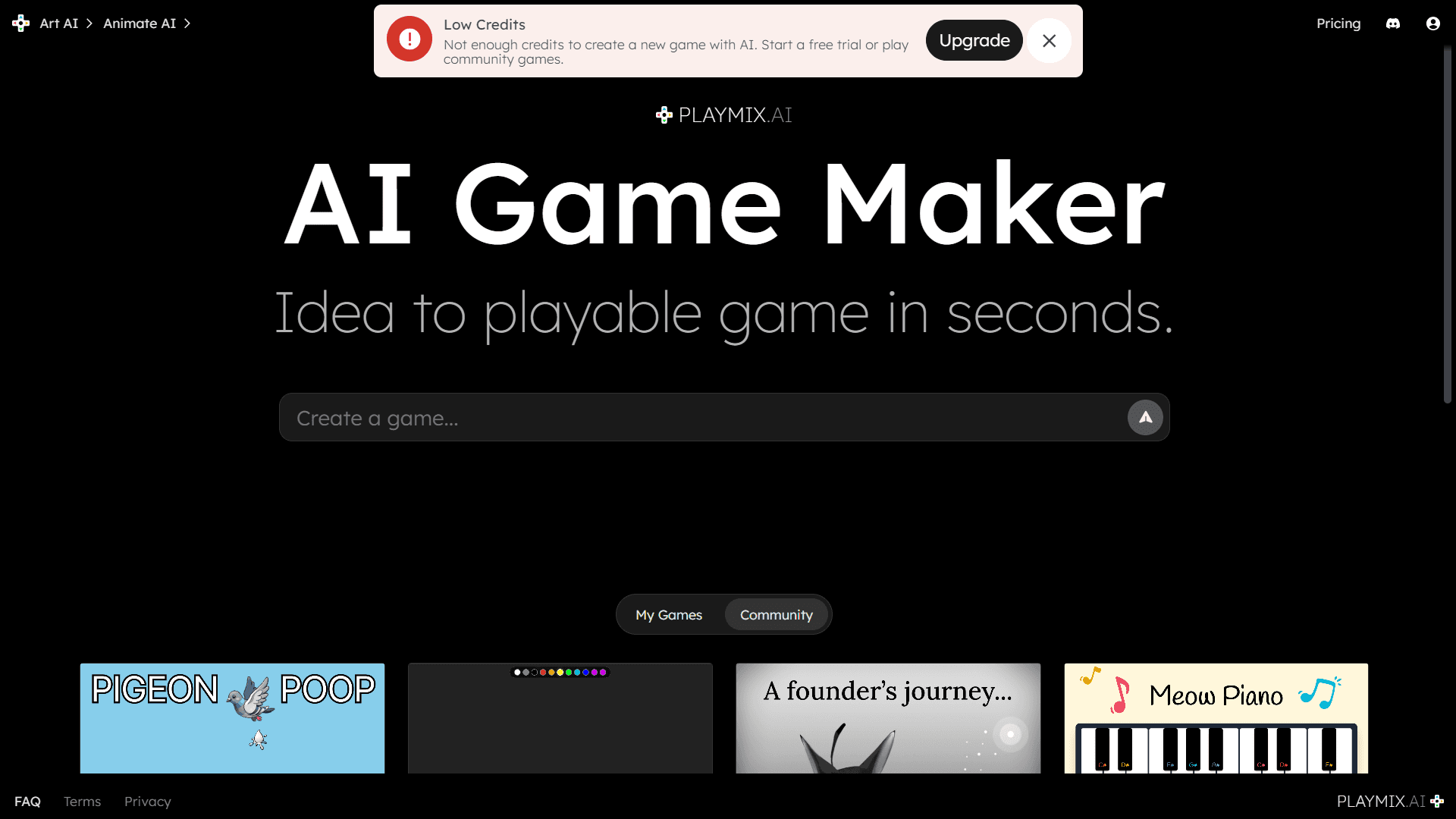
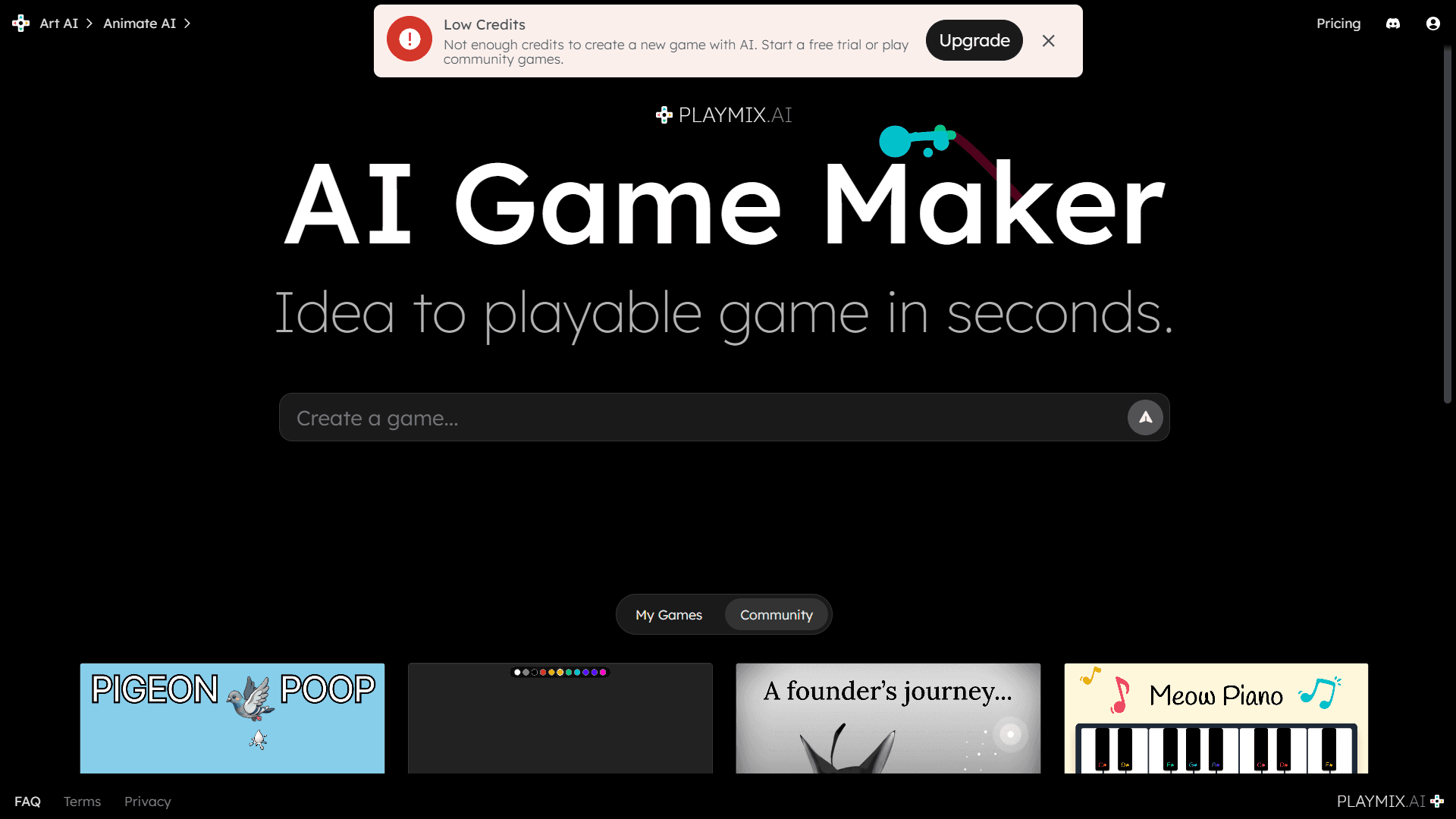
The pricing page and FAQ both mention free credits. But when a user types their first prompt, they get a "Low Credits" error immediately.
This isn't just confusing — it's a trust-breaker. Users don't read error messages charitably. They read them as: "This product is not what it claimed to be." And they leave.
Leak #2 — The Paywall Is Blocking the "Wow" Moment
The entire value of Playmix lives in one moment: you type an idea, and a real game appears. That's the hook. That's what makes people pull out a credit card.
But right now, users never reach that moment. They hit a payment wall before they've experienced anything worth paying for.
The data makes this even more telling: some users were spending hours on the site without converting. They weren't uninterested. They were engaged but unconvinced — which means the product wasn't getting the chance to close the sale.
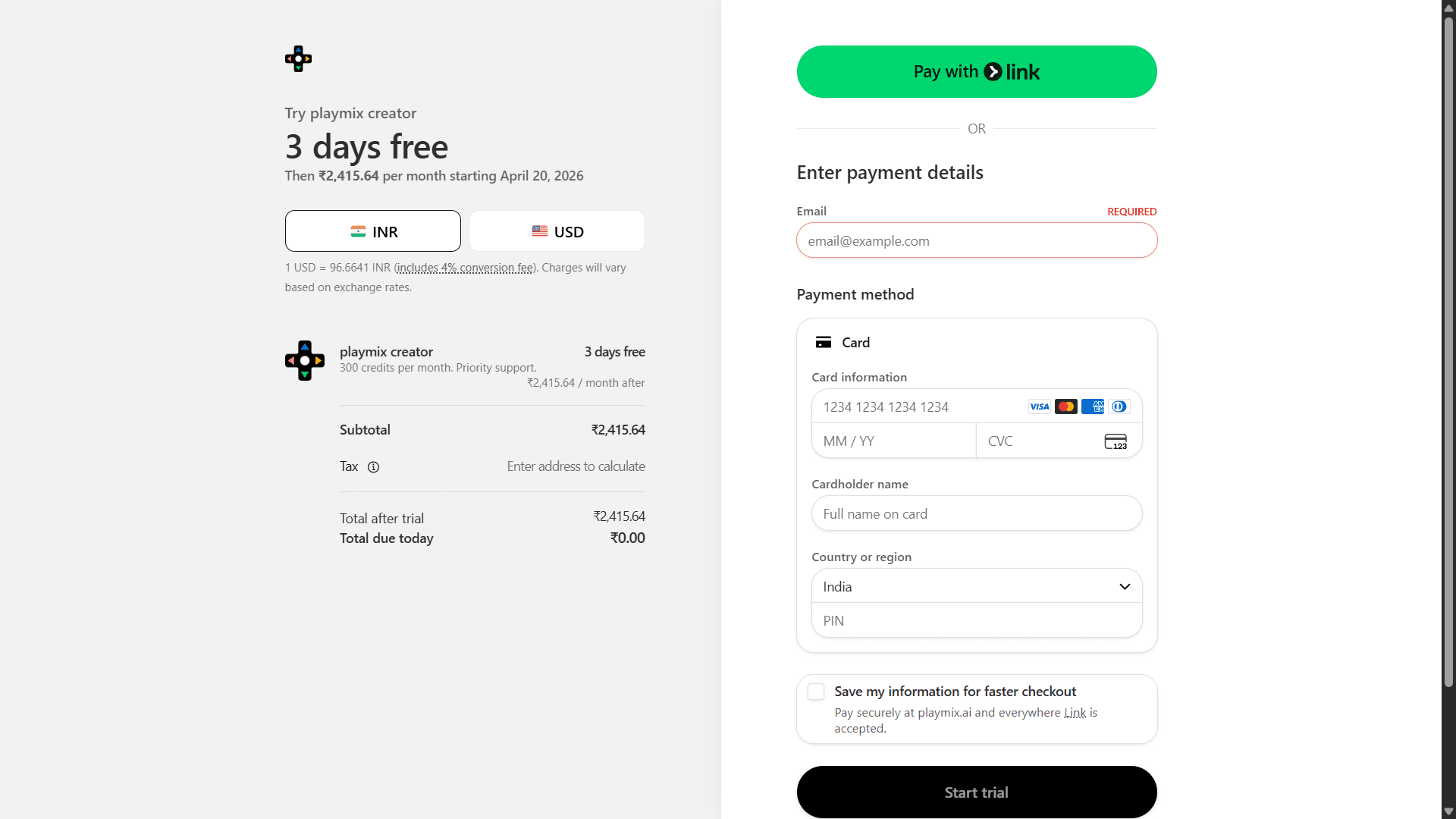
Leak #3 — "Get Started" Goes Straight to a Credit Card Form
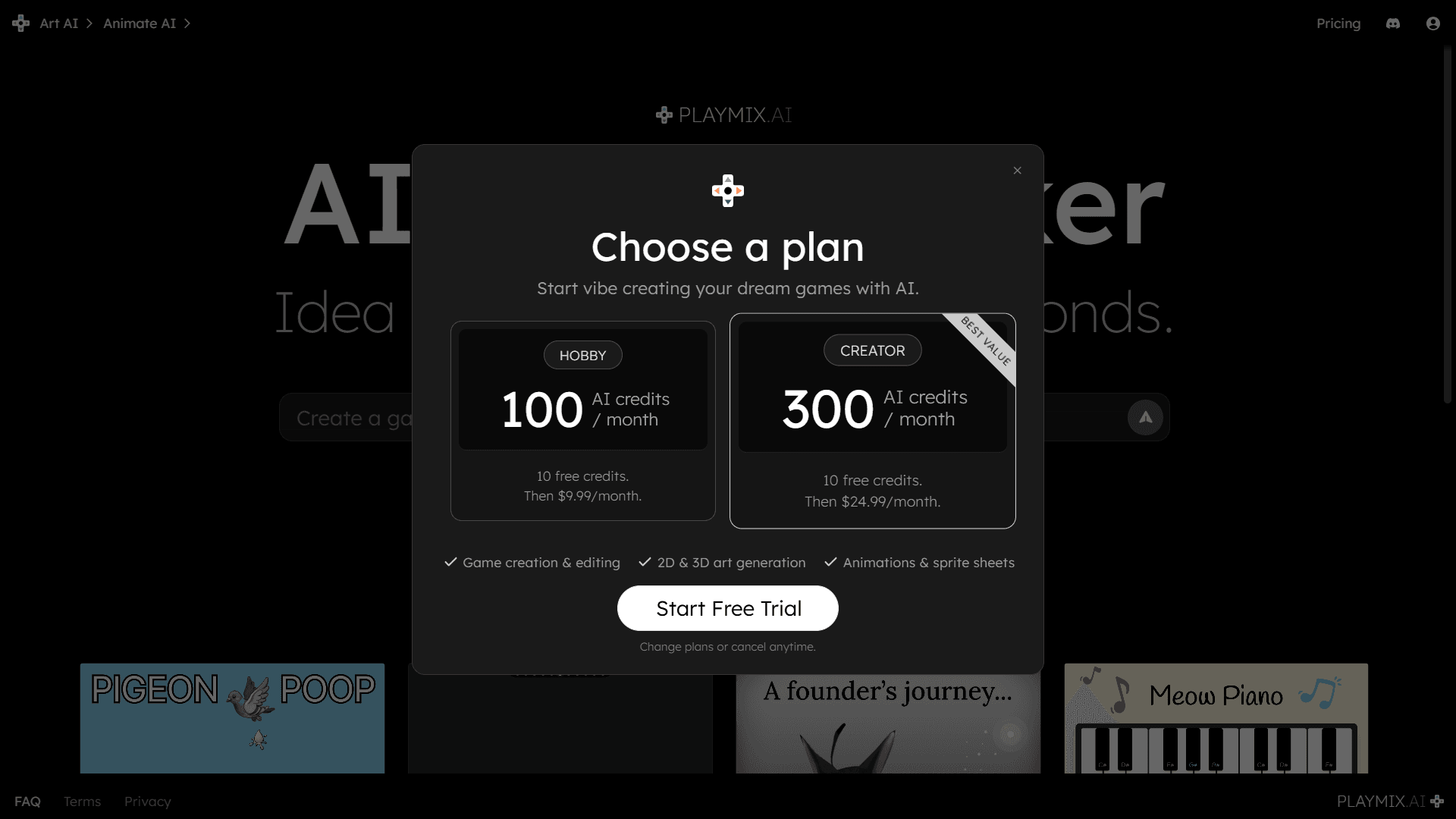
Clicking the primary CTA skips account creation entirely and drops the user onto a payment page. No dashboard. No saved work. No sense of ownership.
Behaviorally, this is a huge ask. You're asking someone to hand over financial details for a product they've never touched. For $9.99, that friction is enough to kill the conversion.
The Fix: 5 Prioritized Recommendations
I ranked these by behavioral impact, not implementation effort.
1. Remove the credit card requirement for trials Give users 3–5 free credits. Let them make one game. One successful creation will outperform any copy on the pricing page.
2. Fix the free credits messaging Either give the credits you're promising, or remove the mention entirely. Confusion kills trust faster than a hard paywall does.
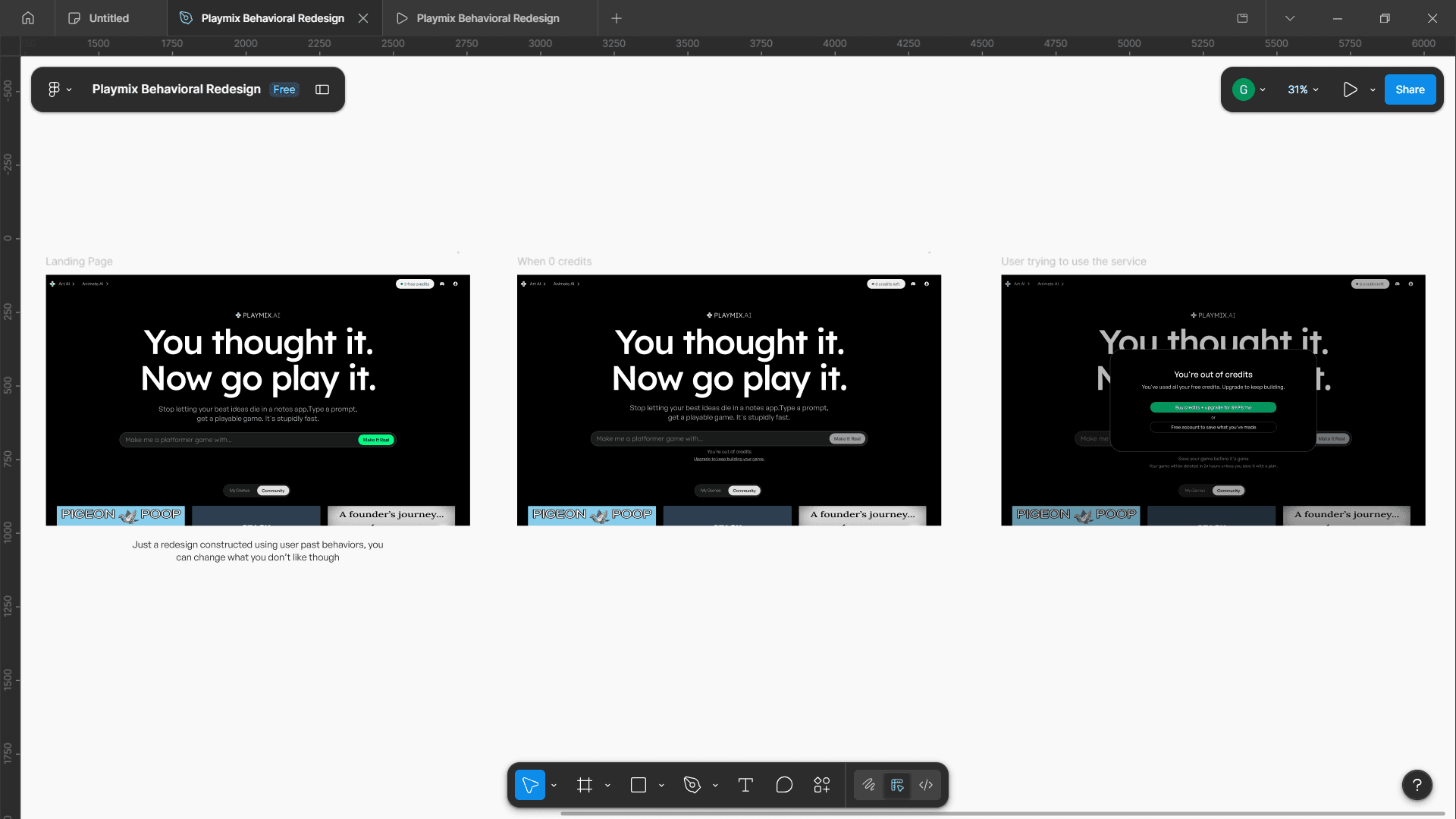
3. Add a smart upgrade trigger for engaged users Replace the passive "Upgrade" button with a time-based loss-aversion message when someone tries to make their second or third game: "Your game will be deleted in 24 hours unless you save it." People protect what they've already created.
4. Gate with account creation, not payment When free credits run out, ask for an account — not a card. Let them save their game. Once they have a dashboard with their name on it, asking them to upgrade feels natural instead of abrupt.
5. Rebuild the pricing page with social proof and anchoring Add user testimonials, a money-back guarantee, and anchor the plans so the middle tier reads as the obvious choice. Small changes in pricing layout have outsized effects on plan selection.
AI Workflow designed to get users from personalized emailing (using nudge) to active feature adoption based on user behavior
Deliverables Included in This Audit
Full written audit with behavioral analysis
Annotated user journey map
3 screen redesigns (Figma): revised onboarding flow, smart upgrade moment, improved pricing page
Provided ai workflow in their personal workspace
Figma File: Playmix.ai Redesigned screens
Audit type: 72hr Conversion Leak Audit
The Takeaway
Playmix doesn't have a product problem. It has a sequencing problem. The right ask at the wrong moment is still a failed conversion.
Fix the door. The product will do the rest.